If bedtime keeps stretching into one more drink, one more hug, and one more delay, the problem usually is not your child. It is that the routine lives in your head instead of somewhere they can see and follow.
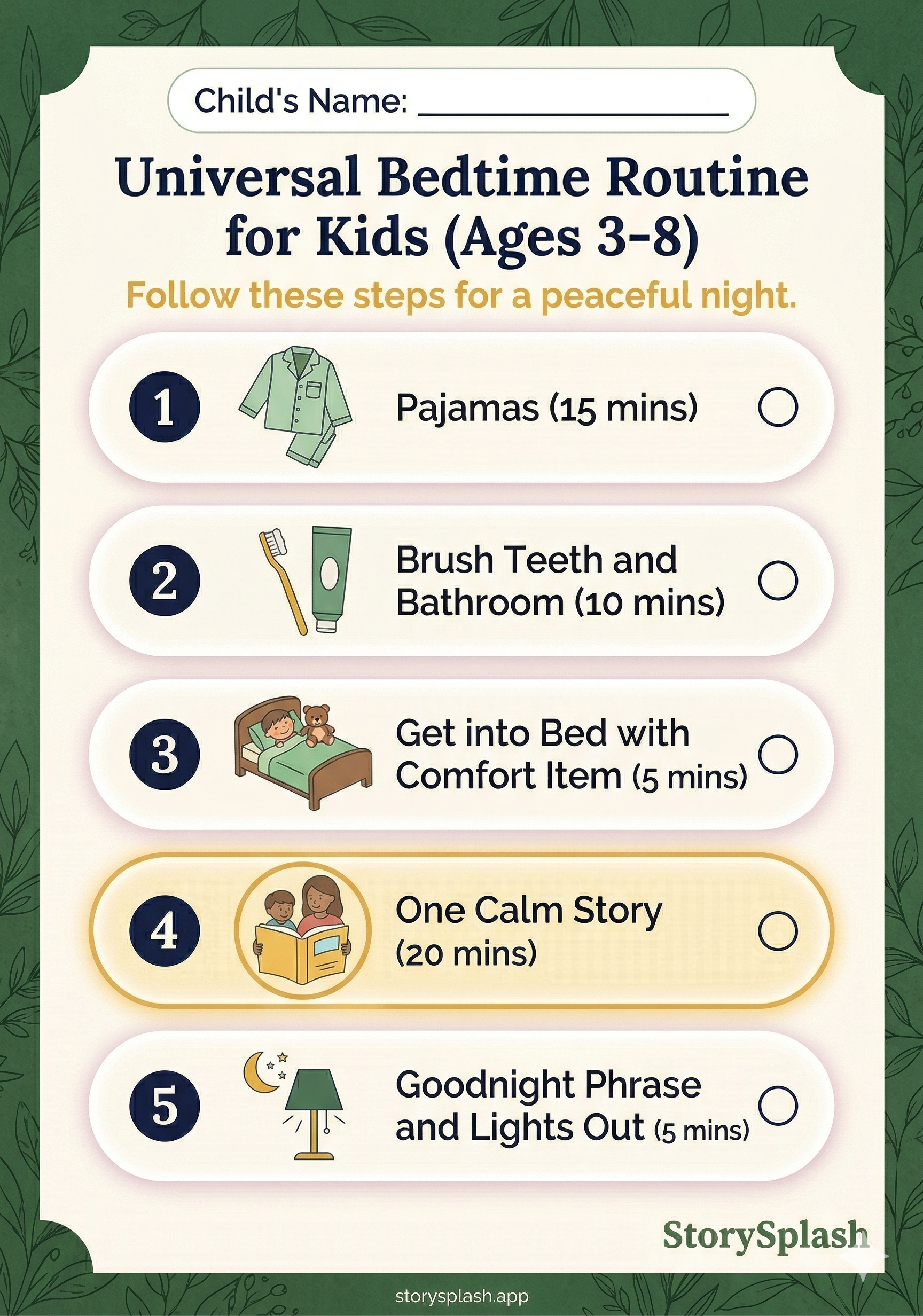
A bedtime routine chart gives the evening a shape. When the last step is a calm story, children know exactly what comes next and bedtime stops feeling like a negotiation.
There’s a free printable chart below if you’d like to use one.
Why a Bedtime Routine Chart Works Better Than Repeating Yourself
Most kids do better with a sequence they can predict than with reminders they have to remember. A chart turns bedtime from a stream of parent instructions into a visible pattern: pajamas, teeth, toilet, story, lights out. That lowers friction because your child is not deciding what happens next every two minutes.
It also helps you stay consistent on tired nights. You are not reinventing the evening or arguing about whether there is time for another activity. You are just moving to the next square.
Practical tip: Put the chart at your child’s eye level and point to the next step instead of repeating the whole routine out loud.
A Simple Bedtime Routine Chart for Kids Ages 3-8
This is the version most families can actually keep up with on school nights. You can screenshot it, print the page, or copy it onto paper with simple checkboxes.
| Step | What to do | Target time |
|---|---|---|
| 1 | Put on pajamas | 2 minutes |
| 2 | Brush teeth and use the bathroom | 5 minutes |
| 3 | Get into bed with one comfort item | 2 minutes |
| 4 | Read or listen to one calm story | 8 minutes |
| 5 | Goodnight phrase, cuddles, lights out | 3 minutes |
The key is keeping the chart short enough that your child can finish it before they get a second wind. Five clear steps is usually enough for ages 3-8.
Practical tip: Use pictures for younger children and words for older ones so the chart feels readable without your help.
Make Story Time the Anchor Step
If one step holds the whole routine together, it is the story. Story time is the moment when your child finally stops moving from task to task and settles into one predictable, comforting activity. That is why it works so well near the end of the chart instead of at the beginning.
The story should be short, calm, and easy to repeat every night. If you are too tired to come up with one yourself, StorySplash can generate a personalized illustrated bedtime story starring your child in about 2-3 minutes, which makes it easier to keep the story step consistent even when you are running low on energy.
Practical tip: Keep story time to one story only, and use the same phrase after it ends so your child learns that the story is the bridge to sleep, not the start of another activity.
How to Keep the Chart Working on Hard Nights
No bedtime chart works perfectly when your child is sick, overstimulated, or coming home late. The mistake most parents make is dropping the routine completely. A shorter version works better. Even if you only make it through pajamas, teeth, and one short story, you are still protecting the signal that bedtime has started.
It also helps to resist adding bonus steps as rewards. Extra songs, extra books, or extra screen time teach your child that the chart is flexible in exactly the wrong places. Keep the sequence steady and make the story the part they look forward to.
Practical tip: On rough nights, shorten the routine but keep the order exactly the same.