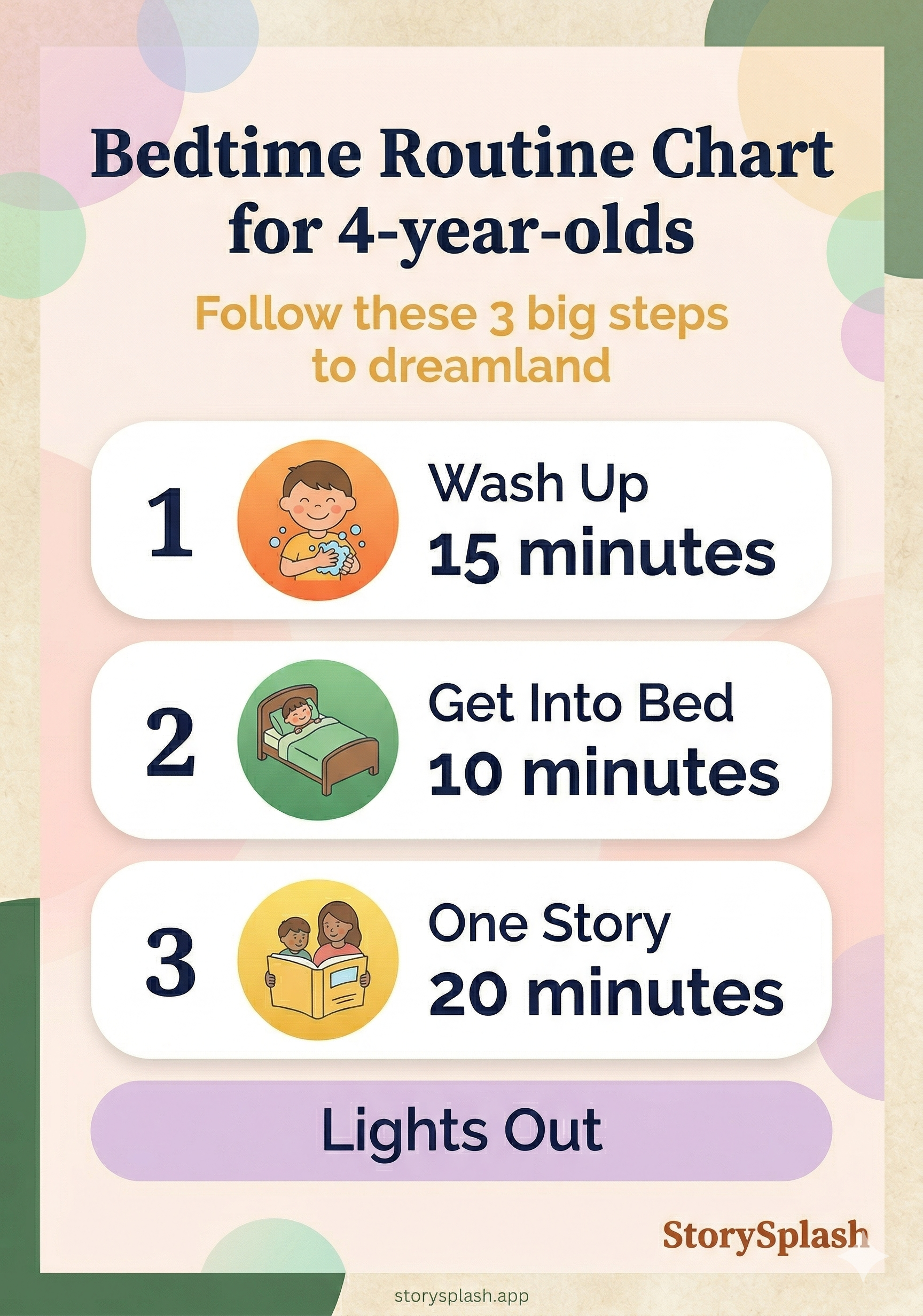
Most bedtime routines fail for one reason: they try to do too much. Bath, teeth, three books, two songs, a glass of water, one more hug — by the time the light goes off, it’s been 90 minutes and everyone is frustrated.
Here’s a tighter approach that actually holds.
You’ll find a free printable version below.
The 20-Minute Window (And Why It Works)
Four-year-olds don’t need winding down. They need a clear signal that the day is done. When you do the same sequence at the same time every night, their nervous system starts doing the work for you — they begin calming before you even start.
The sequence matters more than the duration. Keep it to three steps: wash up, get into bed, hear a story. That’s it.
Make the Story Do the Heavy Lifting
The story is the most powerful part of the routine, but only if your child feels connected to it. A story about a random character they’ve never met won’t hold attention the way a story starring them does.
When your child is the hero of the story, they lean in. They stop wriggling. They want to know what happens next — and then they want to find out in their dreams. That’s the transition you’re aiming for.
Keep the story to 5–8 minutes. Any longer and you risk a second wind.
The Exit That Doesn’t Invite Negotiation
This is where most routines break down. The story ends, and then the bargaining starts.
The fix is building a ritual ending into the story itself. “And as [child’s name] drifted off in the cosy treehouse, the stars came out one by one…” Signal sleep inside the story, not after it. Then close the book, say the same phrase every night (“sleep tight, brave one” or whatever feels natural to you), and leave.
Consistency here is the whole game. The first week is the hardest. By week three, they’ll be half-asleep before the story is finished.
What to Do When It Falls Apart
Some nights it won’t work. Travel, illness, a big day — something will throw it off. The instinct is to try harder and compensate. Don’t. A shortened version of the routine is always better than skipping it. Even five minutes of story time signals to their brain that sleep is coming.
Build in the story as the non-negotiable. Everything else is negotiable.